HLA-DQ mismatches lead to more unacceptable antigens, greater sensitization, and increased disparities in repeat transplant candidates
 , Copley, H. C., Kosmoliaptsis, V. & Tambur, A. R.
(2022).
HLA-DQ mismatches lead to more unacceptable antigens, greater sensitization, and increased disparities in repeat transplant candidates.
Journal of the American Society of Nephrology,
33(12), 2293 - 2305.
https://doi.org/10.1681/ASN.2022030296
, Copley, H. C., Kosmoliaptsis, V. & Tambur, A. R.
(2022).
HLA-DQ mismatches lead to more unacceptable antigens, greater sensitization, and increased disparities in repeat transplant candidates.
Journal of the American Society of Nephrology,
33(12), 2293 - 2305.
https://doi.org/10.1681/ASN.2022030296
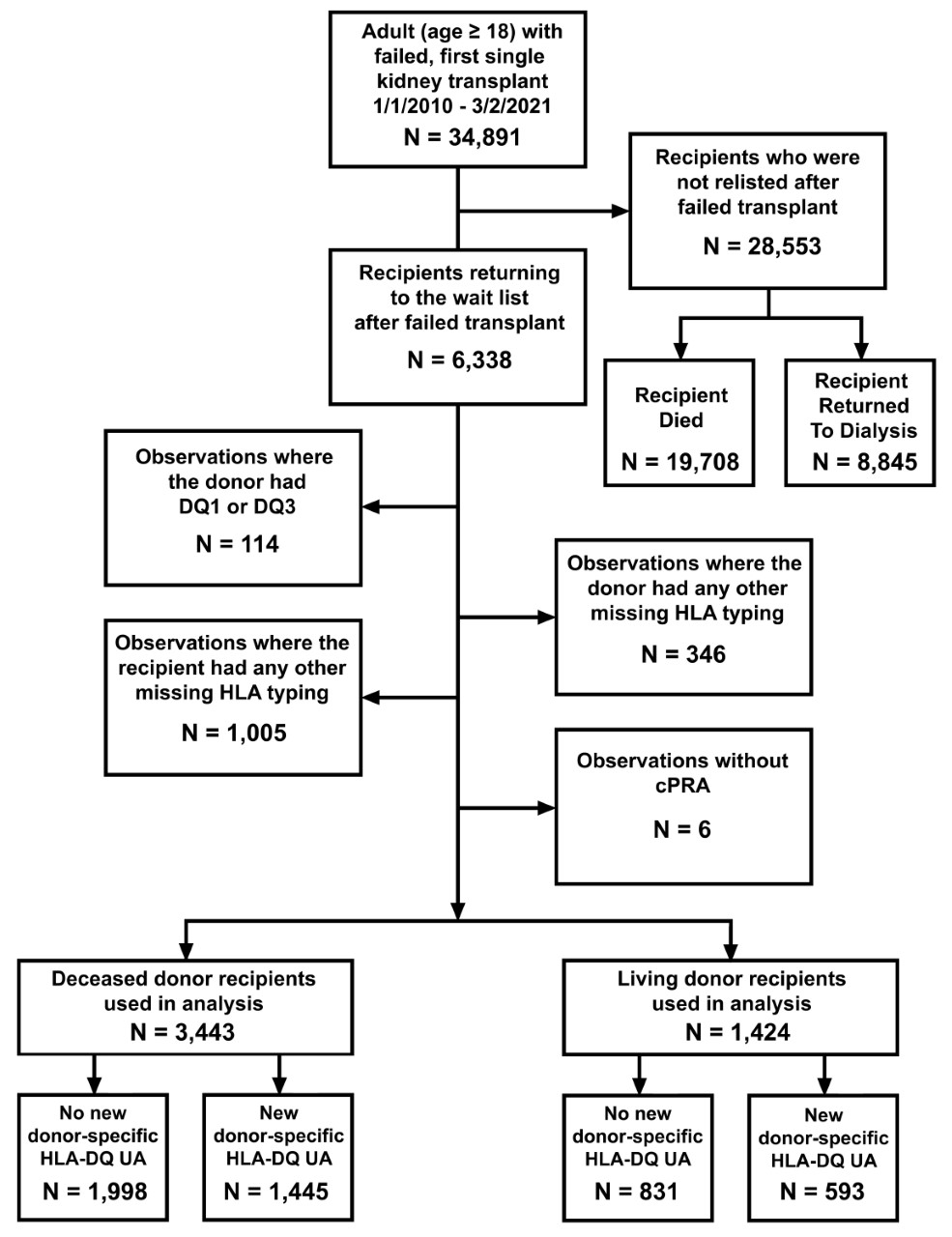
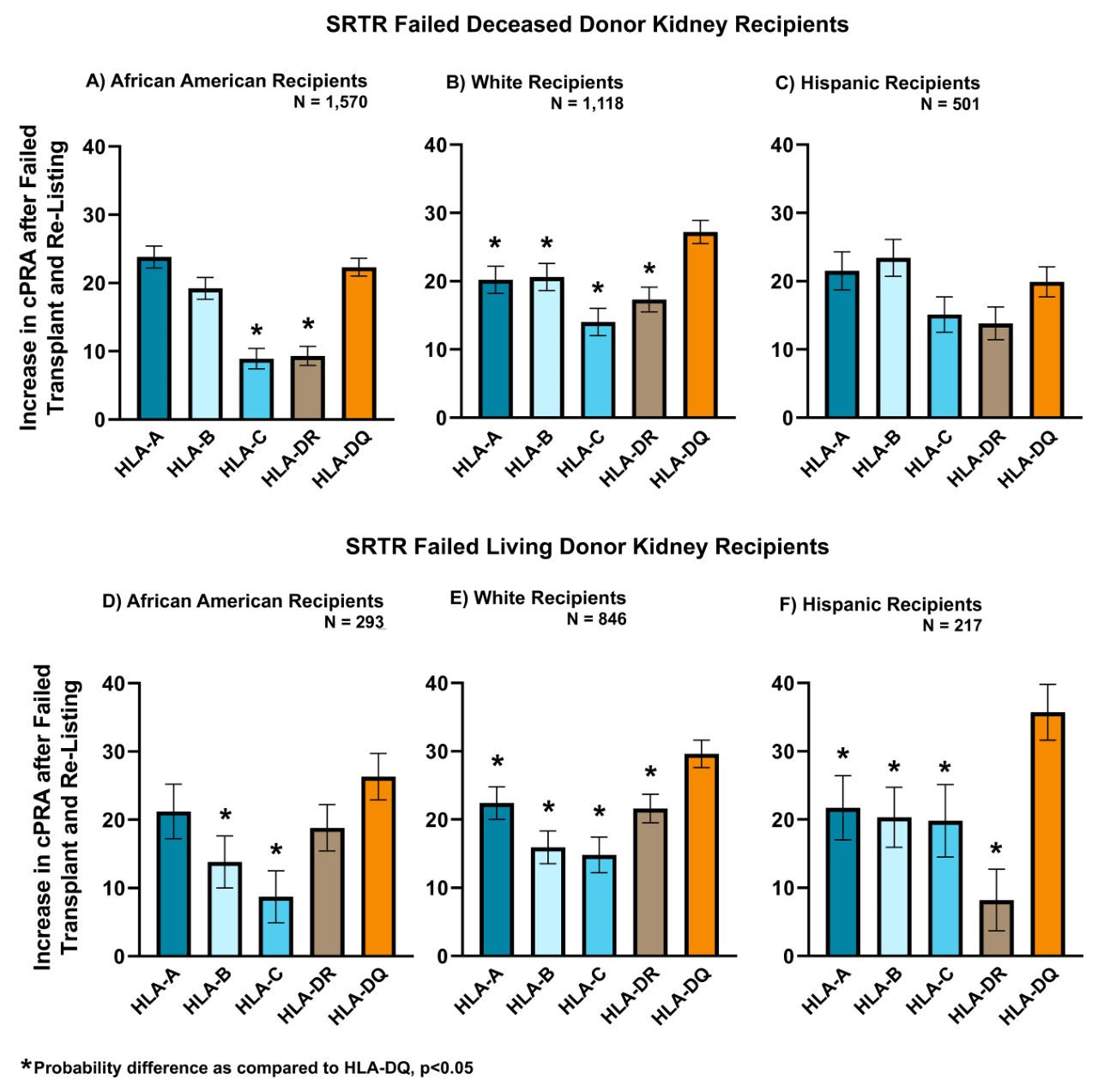
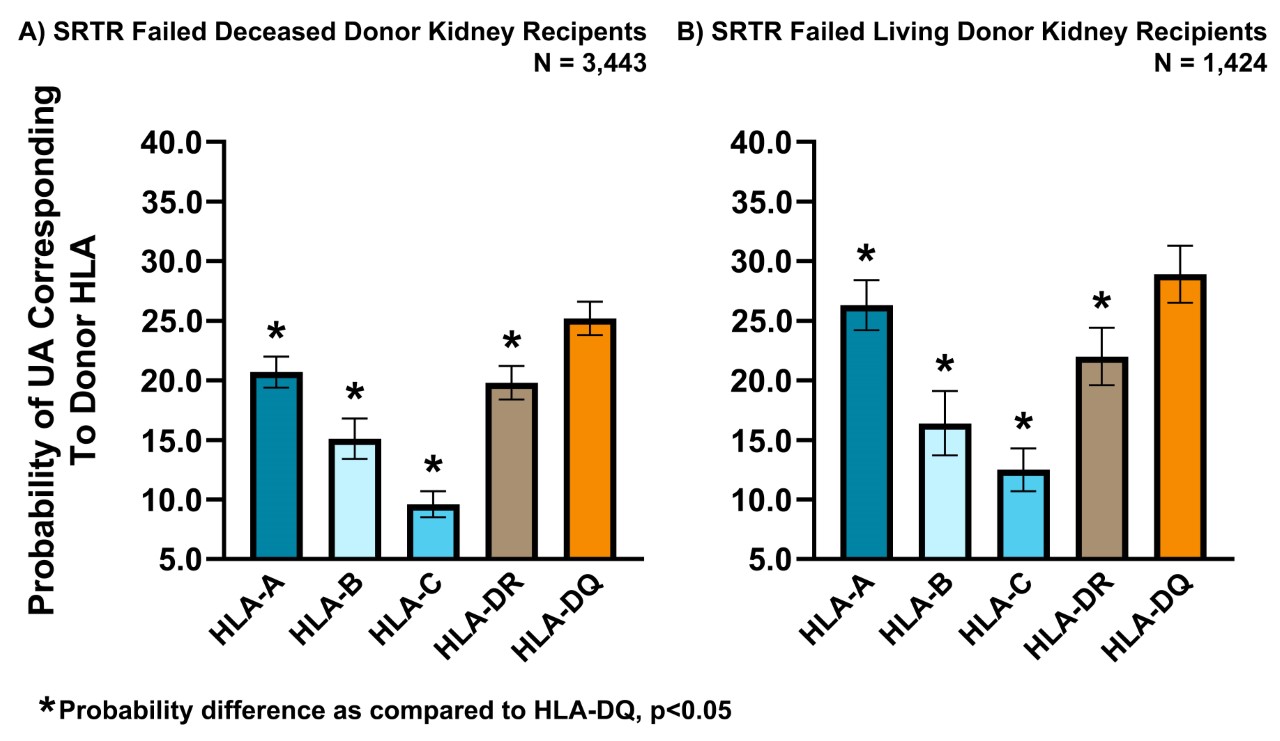
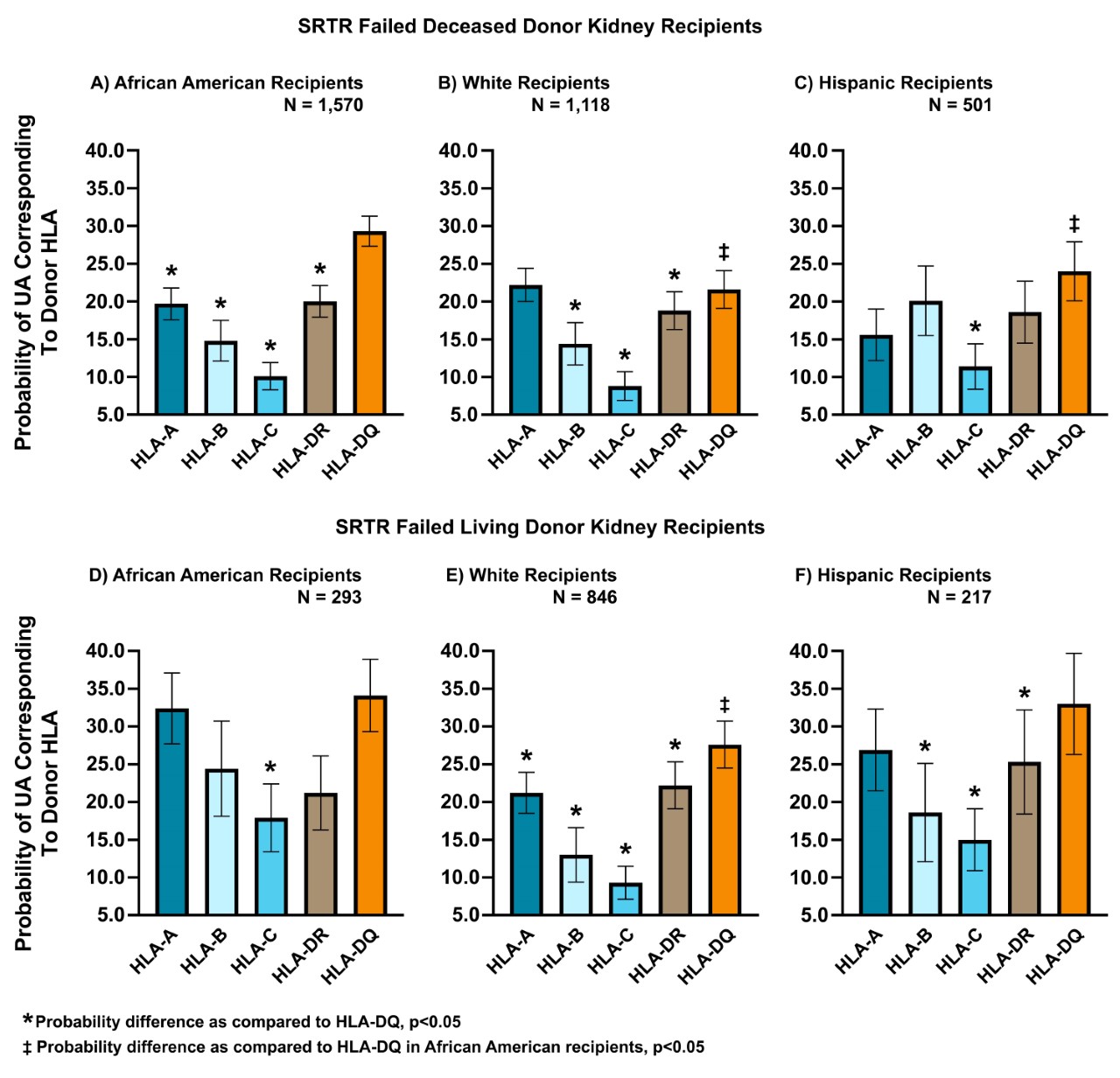
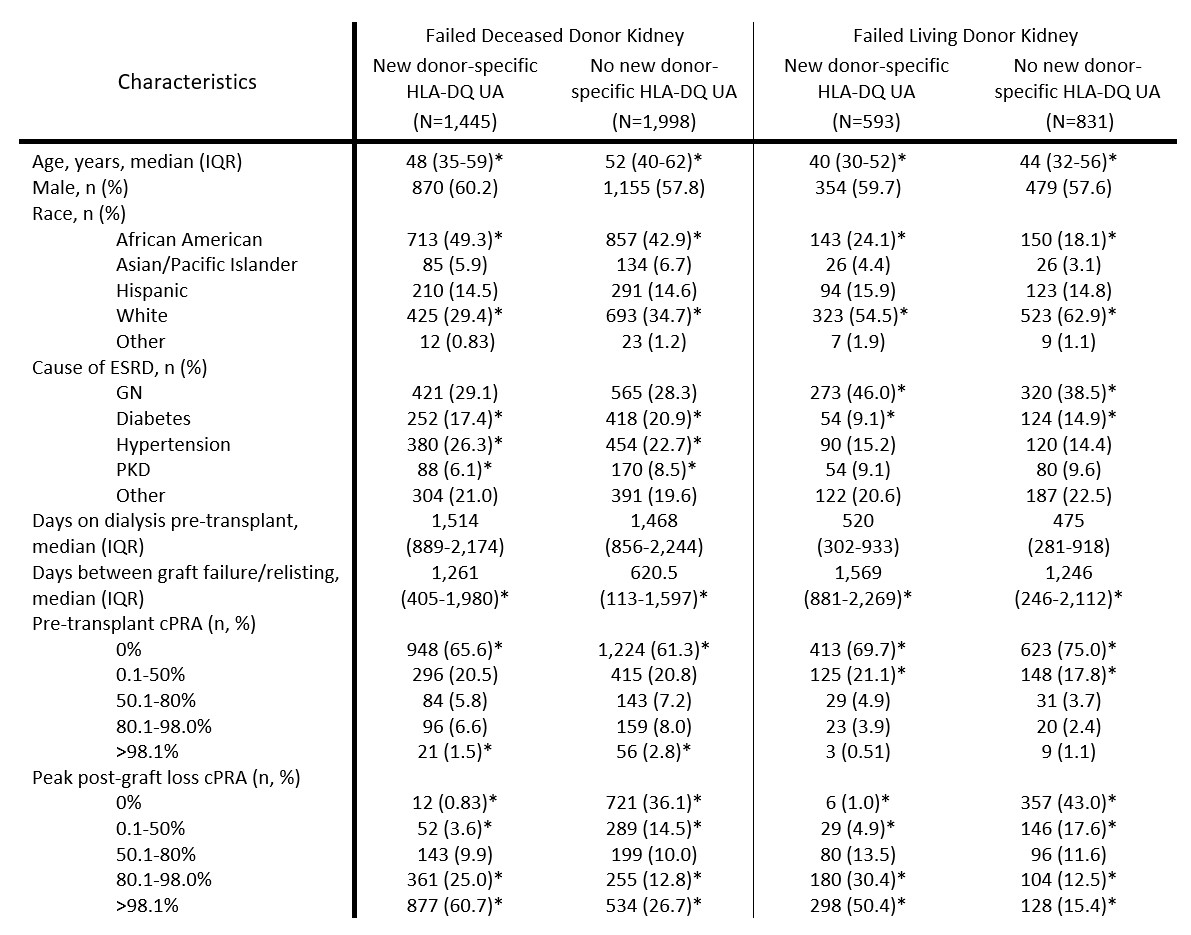
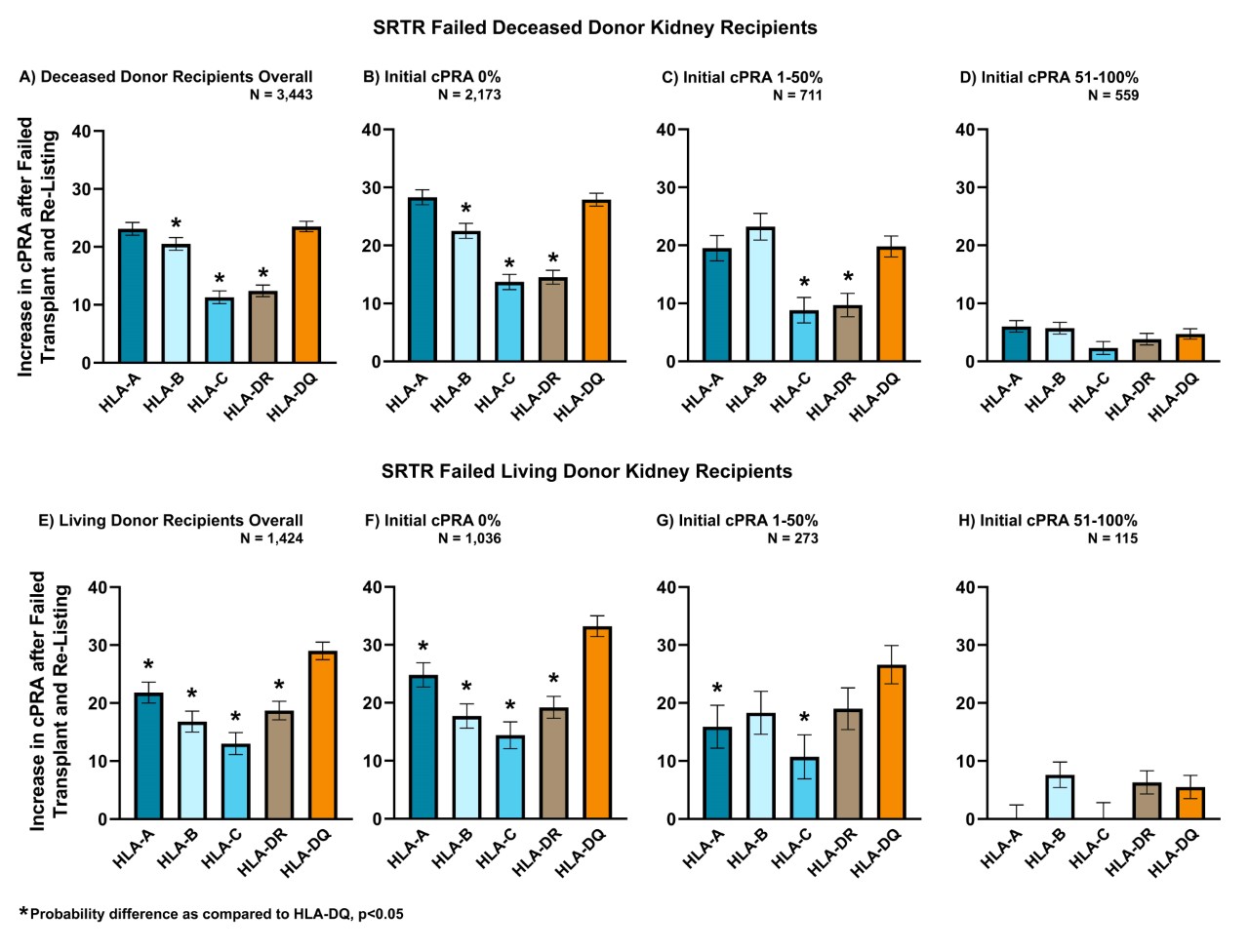
Background In single-center studies, HLA-DQ mismatches stimulate the most pathogenic donor-specific antibodies. However, because of limitations of transplant registries, this cannot be directly confirmed with registry-based analyses. Methods We evaluated patients in the Scientific Registry of Transplant Recipients who were relisted after renal graft failure with new, unacceptable antigens corresponding to the HLA typing of their previous donor (UA-PD) as a proxy for donor-specific antibodies. Linear regression was applied to estimate the effects of HLA mismatches on UA-PD and the effects of UA-PD on calculated panel reactive antibody (cPRA) values for 4867 kidney recipients from 2010 to 2021. Results Each additional HLA-DQ mismatch increased the probability of UA-PD by 25.2% among deceased donor transplant recipients and by 28.9% among living donor transplant recipients, significantly more than all other HLA loci (P<0.05). HLA-DQ UA-PD increased cPRA by 29.0% in living donor transplant recipients and by 23.5% in deceased donor transplant recipients, significantly more than all loci except for HLA-A in deceased donor transplant recipients (23.1%). African American deceased donor transplant recipients were significantly more likely than Hispanic and White recipients to develop HLA-DQ UA-PD; among living donor transplant recipients, African American or Hispanic recipients were significantly more likely to do so compared with White recipients. Models evaluating interactions between HLA-DR/DQ mismatches revealed largely independent effects of HLA-DQ mismatches on HLA-DQ UA-PD. Conclusions HLA-DQ mismatches had the strongest associations with UA-PD, an effect that was greatest in African American and Hispanic recipients. cPRA increases with HLA-DQ UA-PD were equivalent or larger than any other HLA locus. This suggests a need to consider the effects of HLA-DQ in kidney allocation.
-
picture_as_pdf - HLA_DQ_Mismatches_Lead_to_More_Unacceptable_Antigens_Greater_Sensitization_and_Increased_Disparities_as_Demonstrated_in_Repeat_Transplant_Candidates.pdf
-
subject - Accepted Version
-
picture_as_pdf - Table_S1._Race_Ethnicity_Demographic_Table_FINAL.pdf
-
subject - Accepted Version

-
image - thumbnail_Figure_S1._Donor_Recipient_Interaction_Scenarios_UA_PD_REVISED_FOR_PROOF_002_.jpg
-
subject - Accepted Version

-
image - thumbnail_Figure_6._New_cPRA_race_ethnicity_figure_cPRA_0_percent_only.jpg
-
subject - Accepted Version

-
image - thumbnail_Figure_S2._Donor_Recipient_Interaction_Scenarios_cPRA_deceased_donors_REVISED_FOR_PROOF.jpg
-
subject - Accepted Version

-
image - thumbnail_Figure_S3._Donor_Recipient_Interaction_Scenarios_cPRA_living_donors_REVISED_FOR_PROOF_002_.jpg
-
subject - Accepted Version